Because You Are My Mother and Sometimes You Are Sad and You Are My Mother
November 14, 2025
Dear Mom,
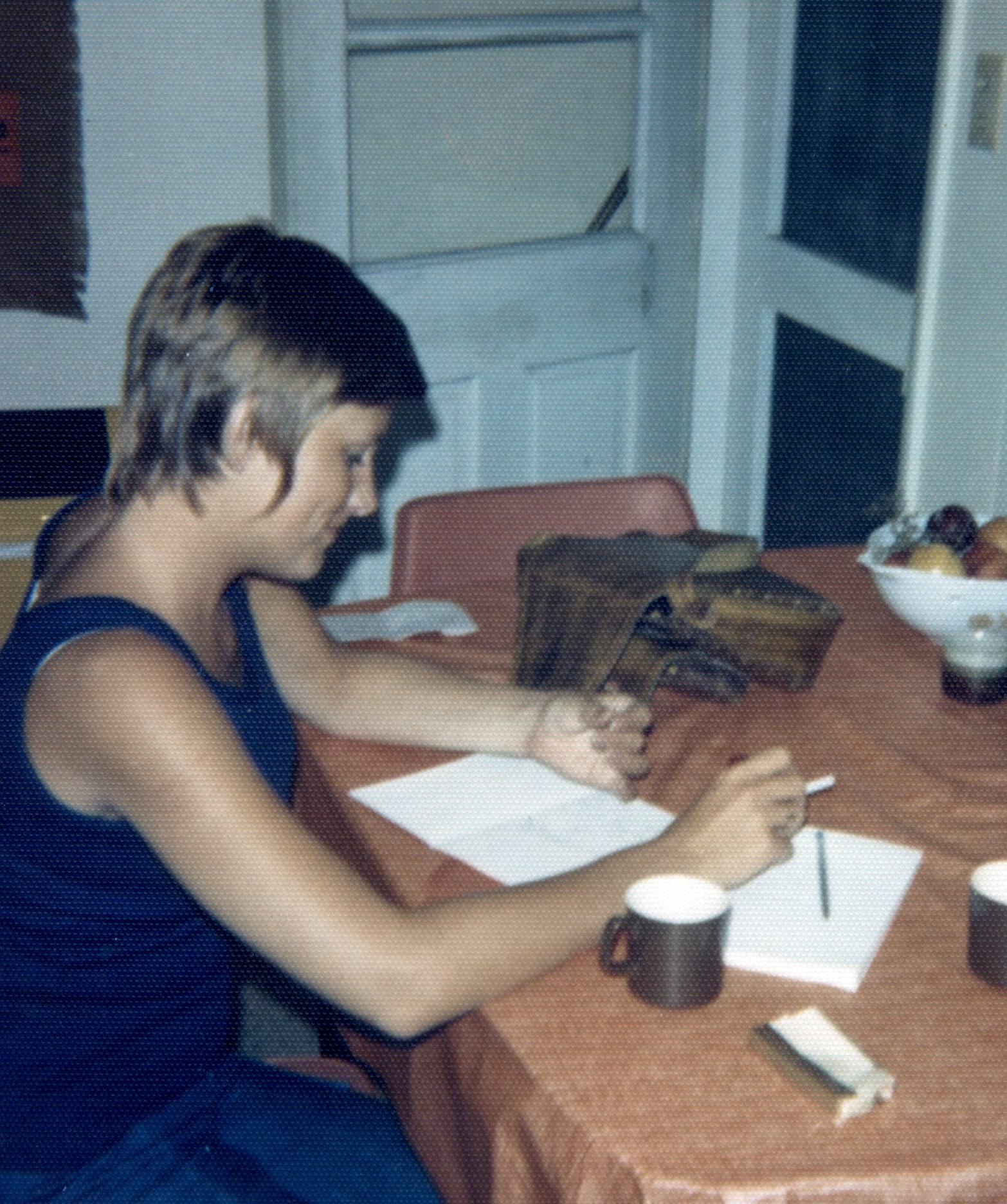
I started this letter a year ago as a present for your 75th birthday and we were different people but still us. I was born in 1978 because you gave birth to me. I now have two children, daughters, giving birth to neither. I never thought to become the things I’ve so centrally become, a teacher and a parent, and I wonder how much that is the same for you. I’ve been looking at old pictures of you, most probably taken by Dad who scanned them all, decades of family and personal photos, and uploaded them online and now I can browse an image-fixed past. You thin with short hair, narrow face, not unlike Edie, the it-girl for a time. You seemed to change your look every picture, which I also remember from childhood as you explored your aesthetics of the self. You reading a book in a camper. You graduating nursing school. You younger, much younger than me now. I wonder how much your brain wanted to know everything and how curious you were about it all, how you listened to records and watched TV and thought how it related to you in small town Minnesota and the places after. What you found and find now central to what of the who you are. A nurse in your early 20s and a life in and around medical care, drug and alcohol centers to hospice, life from desire to death. At what point did you think artist. At what point did you think mother. At what point a you you’ve never said or forgotten. My life tells me we cannot really know how we are perceived by others but I’d love to know how you see me, as you’ve seen me the most intensely for my first sixteen years and in other ways after. Though we can abandon it the touch of parenthood never abandons. And when did you become sad. I didn’t notice, as children tend not to, until the early 90s, I was maybe twelve and you installed a light in your bedroom that mimicked the sun. Prozac was on the news along with more pill based solutions to seemingly intractable problems of the mind. You knew these things long before I knew these things. At what point did you know Grandpa was sad. When I talk to doctors or when I have talked to friends about sadness I often use his face (which is deep in my own face) as I saw it during the last months of his life lying in his and Grandma’s small bedroom in Crookston, the two-bedroom house you and Sandy and Mike were all raised in, and I don’t remember him talking to me as I tried talking to him but it looked like he was somewhere deep behind his eyes, like his feeling was an inch or so removed from the surface of his experience and he couldn’t find a way out, like there was a gap he was stuck behind and he probably felt lonely there but maybe he felt just himself there, but this is the image I use to tell people how sadness can feel for me, like I’m a few inches behind my eyes, behind the world, in some glass jar. And now my children have been, at times, very sad, and already I’m regretting a bit this decision to write some letter about sadness for you but then I don’t think we are the sort of people who don’t talk about these things, quite the opposite, we are the sort of people—the me you’ve raised and the me of us, the you of us—who worry it’s the ignoring of such things, sadness and death and longing and loss and a need for deep meaning, that can lead to trouble, that is a kind of non-loving. And I’ve always loved you.
I’ve learned more about death from you than I think one would expect from their mother, as I’ve not experienced much death personally, until recently, and even that at some kind of remove, and you still alive and well. Once when I was still married and at a party at some friends’ house here in York, more her friends than mine, the children, ours and theirs, all in the basement playing, we were all drinking, as we did always, and I was talking with the wife of the couple about our children, about raising them, about what we can and can’t worry about, and if I’m honest I was in some kind of mood (I didn’t realize we were at the end of something yet, but I must have known it somewhere), and I said, “Well, I mean, and also the children will die someday,” and she snapped at me, “Why would you say something like that? What is wrong with you?” You started working in hospice after you quit working in hospitals and doctor offices, towards the end of what we like to call our careers. I didn’t even know what hospice was when you began there, a place to ease pain, but you’d talked openly about death and your feelings and your experience at least since Mike died in the early 1990s, and I’m only realizing, writing this, how it would be like Brandt dying now or soon, and I couldn’t imagine losing him. We just talked on the phone two nights ago—for the first time in months (you know us, you know Brandt)—and his voice, like all voices, carries with it an edge of permanence always, the thing relied on, like everything, as though we didn’t ever believe Newton and his old, established ideas about entropy. When my neighbor’s parents died in quick succession last year he told me in one of our many hallway talks between our apartments how he felt more alone than he had ever felt, like alone on the planet, and he still had his children, his wife (though she would pass months later), his sister and me and the community of friends, but he was admitting the thing people don’t want to, in their fear and comfort. And in later years you talked openly about how you felt after Grandpa died and then Grandma and how you and Dad wanted to be allowed to die should it come to that and what came after (a box with ashes or a grave or nothing). We talked about death for decades now, as we’ve talked about the Buddha and sadness and medication and injury and illness, and I wonder if we haven’t talked about these things more than we have, in our shared lives, in the care and guidance of your mothering, about possessions and travel and retirement and housing, but maybe not, you cannot look at the world without bending it to your bias and this goes with the past.
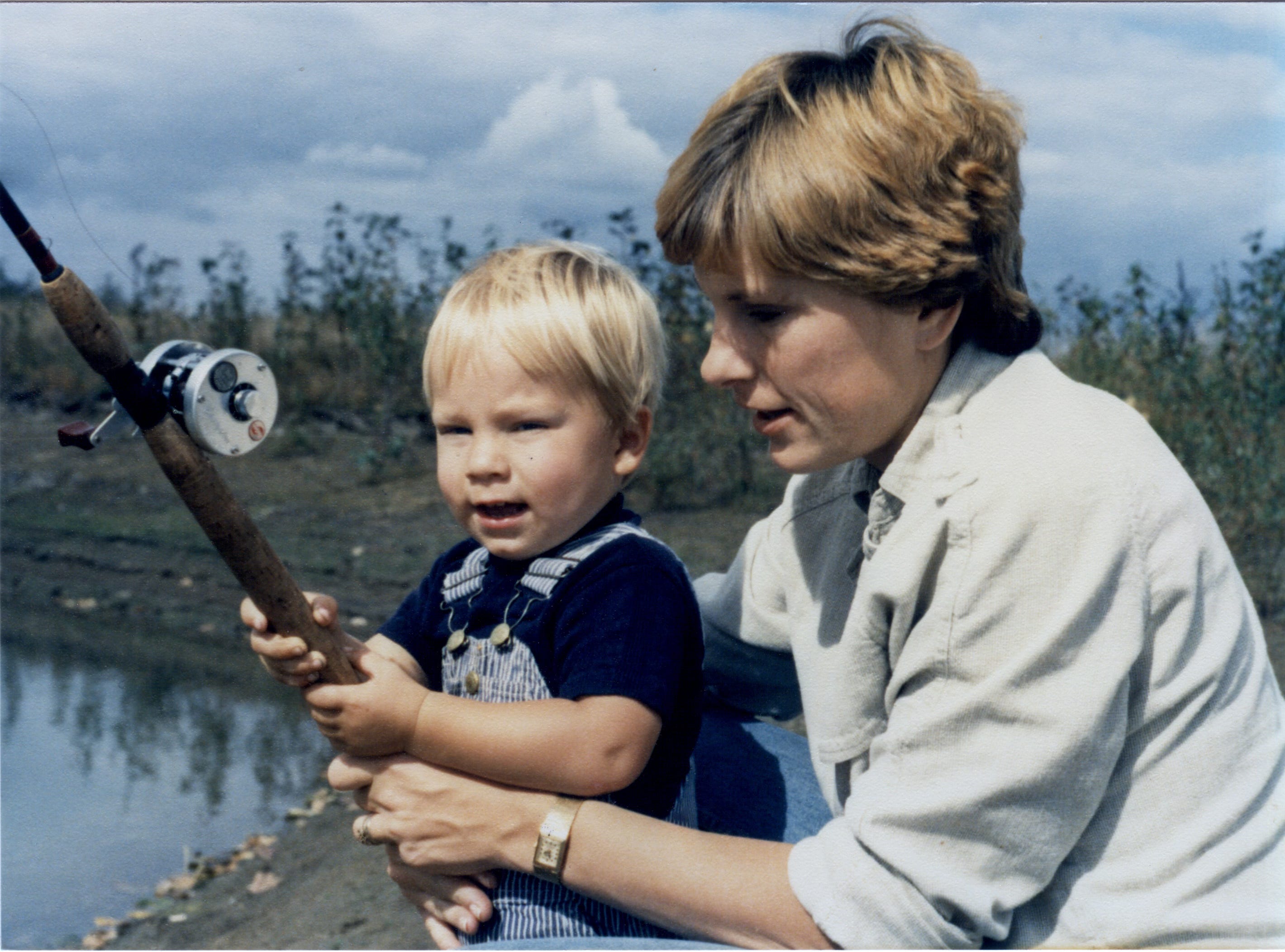
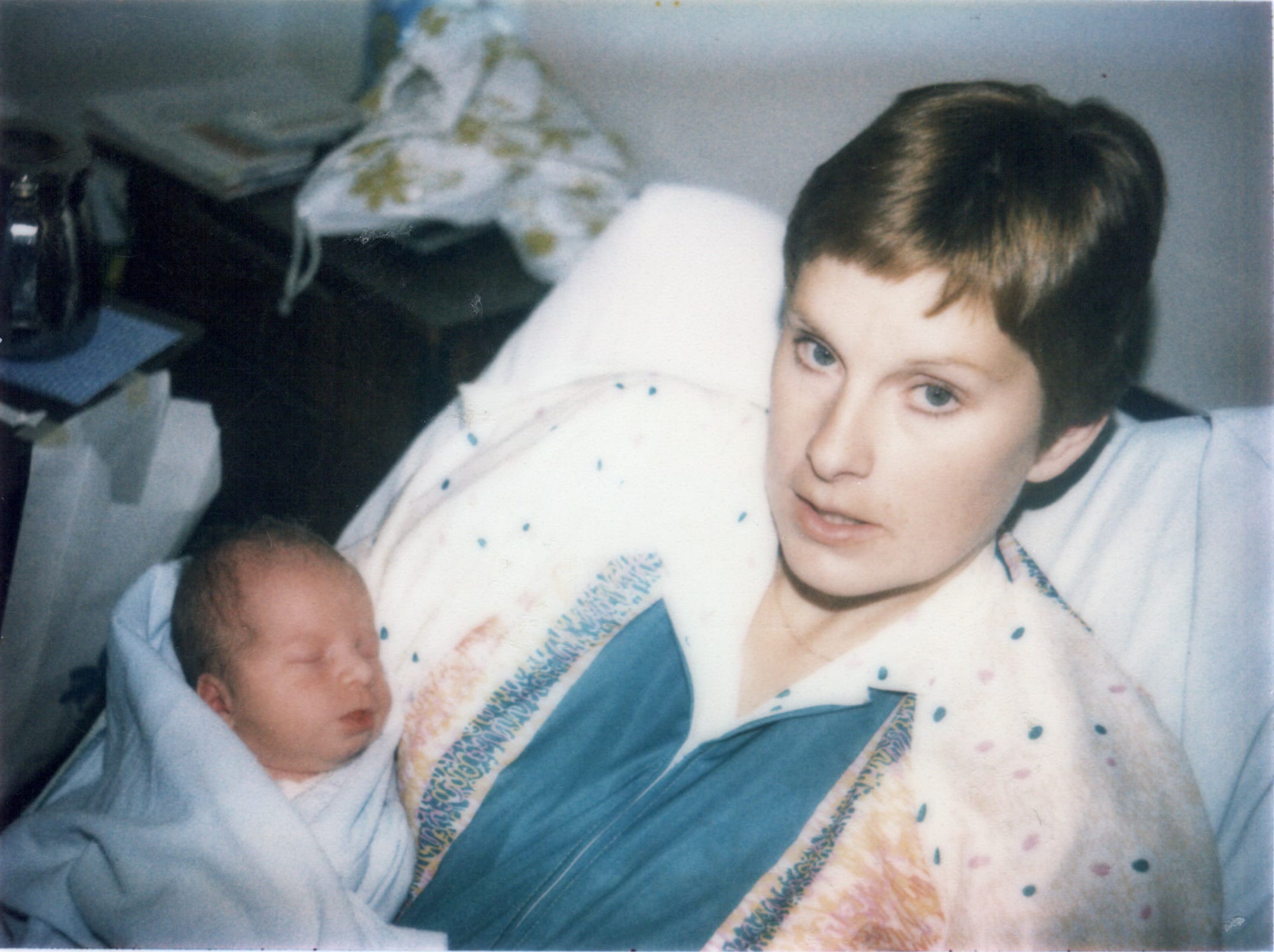
My first memories with you are photographic. You and Dad kept photo albums in the house in Oregon and, together or alone, I remember moving through the pages again and again laying down visual tracks of who I had been. Parades in downtown Sandy dressed in my Cub Scout uniform marching in formation. You in the same parade on one end of a yellow banner of some kind. Camping trips of Boy Scouts or on Mt. Jefferson or at the Oregon coast catching and cooking mussels or oysters—only without the albums now. Baby me in sunglasses the size of my face “driving” a plastic steering wheel, some toy, smiling for the camera. My baby body hooked up with wires and an IV in some hospital bed. My baby body held by your mother and your father, Grandma and Grandpa. Dad has always admired and been proud of his memory and maybe that has something to do with why I’ve always worried my own, how it’s more ideas and words and facts and relationships where Dad’s seems like a home movie filled with objects and actions. A decade ago, writing finally again about Oregon, the past, us, John and Robert and Steven and Teddi and Andréa and everyone, I discovered the writing is a memory device, not just to store but to resurface, and maybe all of the you that is me, the us, is still in there if only I would write about you/us more. I remember us in the living room, me on the floor before the television, our big couch behind running the length of the wall then curving beyond it, watching Perfect Strangers, Balki Bartokomous and his brother. You were not there in my memories of the kindergarten classroom at Bull Run or working with the speech pathologist on my lisp, was she making me sound less gay as we worked on my “sh” and “th” sounds, clearing up my “s” sounds, keeping my forbidden tongue from the back of my teeth, I had such a crush on her, as I did and do, honestly, too easily on everyone. I remember you talking with a neighbor in the entryway of the house as I admired her thighs—America had just discovered spandex and she was out for a bike ride. I remember you bandaging the deep gash I made in my left shin, maybe four-inches long, from my bicycle gear during an accident as I had tried doing some sort of trick on the dirt hill behind our house. The scar is still there. It looks like a layer of thread. I want to say that you were quieter than you needed to be in my childhood but that’s a fallacy of hindsight and a fact of your so caringly living and loving together with us in that small house of men and boys who liked to talk and talk and talk and talk. I wonder, like Virginia Woolf did imagining Shakespeare’s sister in her famous essay about women writers and artists not having rooms of their own and what that lost them and us, what our family life would have been like should I have been born your daughter rather than your son, and just how much of gender is culture and upbringing, and though some conservative voices and even our country’s president are trying to re-entrench some separate spheres bullshit about gender identity, I am fairly happy about how fluid gender ideas have become. Still I wonder how silenced you felt against all of our talking. I do know—and I love, love Dad and am proud of every him I’ve become—that I somehow followed you, in sadness and art.
When I first began writing this letter to you it was about sadness, and I still think it should be about that, because I want to say it is the good things, and I know it doesn’t feel that way. I had been driving and I had a thought I wanted to tell you. This was last November, just before your birthday, and I was at the intersection of George Street and Country Club Road looking up at the face of York Hospital and at the lanes of cars moving across my windshield on George north into the city and south to the interstate towards Harrisburg or Baltimore and I had this thought about sadness that made me so proud of you and grateful for.
Around that time, a few weeks before, a former student phoned me just as I was about to head to the beer store to pick up some IPAs to bring, as it tradition now, to your place for dinner. It must have been a Saturday in late October or early November. I took the call. Across decades of teaching from Mississippi to Pennsylvania my students current or former almost never phone. This student had just graduated earlier that spring. This wasn’t the first time she had phoned, but the last time she had phoned, when still a student, it was important, and so I figured it was probably important now. We hadn’t spoken since she graduated. I could tell right away she was down, and she talked about how sad she thought it was how temporary relationships are, and how she wants everyone to stay connected, always, forever, and it’s a tragedy in this world that people don’t, a tragedy she’s having trouble with. It was late afternoon on a Saturday and I was supposed to be buying the beer and heading to your house for dinner but for some reason I was telling this former student about how I had spent much of the day twenty years ago with a young woman and then never talked to her again. I explained how I couldn’t remember how we had begun talking, the woman and I, but that I think it had something to do with the comic book she was reading alone at the bar on that bright early afternoon, Give Me Liberty, a comic about Martha Washington, a brilliant and traumatized young black woman in a near future dystopia (1995 to 2012, I looked it up, and so a future now well in our past). I had remembered the title from when it came out in 1990, when I was 12 years old and spent all of my money and much of your money on comic books. And then at the bar it was probably 2002 and so I was 23, unless it was October or later when I was 24, serving lager and fish & chips at a British pub in southern Oregon. We talked the rest of my shift, she and I, as I was pouring pints and taking orders and wiping tables. I basically ran the bar myself those morning to early afternoon shifts. We chatted, flirted, about comics and music—the band Rainer Maria, I particularly recall, and so also the eponymous poet—after which I then walked with her, sun still up, back to the bed and breakfast where I think her parents were staying, talking the entire time then, too, walking slowly and slower, after which, after waving goodbye and her disappearing behind some door, I never saw her again. “Why didn’t you get her number,” my former student asked on the phone, “try to keep in touch?” I don’t know, I said. It’s not like I didn’t want to. I remember finding her incredibly interesting, and both our connection and the day a bit small-m magical. I can still see the shade of late afternoon daylight across the gray pavement. The warm air. The bright, pastel houses. Copious bushes and flowers lining the Ashland streets. Greens, reds, and yellows. Leaves and long stalks. The wind soft, sunlight calm. I could be misremembering some, it’s all like an impressionist painting now, washes of overlapping color and light and motion. I don’t know why I didn’t try to stay in touch or get her number. Life was in many ways a bit more intentional then, before our digital selves consumed so much of our social. Back when everyone was not partially in touch across the internet with so many others, a little bit connected all the time, and so every even partial contact always potentially unrealized blossoming. I would have had to phone or write her later, which would maybe mean deciding whether or not to visit, and what came next. We were all a bit more exposed then, or maybe less exposed, I’m not quite sure which one yet. No one knows how important anything will be, whether or not to let that meaningful thing just drift off, exist forever as a having been, simply a memory, meaningful and lovely, and let that be enough. Or when something should be fought for, held on to, appreciated and attended to in the here and now, maybe not forever but as long as possible. “Attention is the beginning of devotion,” poet Mary Oliver wrote. I always miss everyone a little too much, such as Holden Caulfield similarly complains at the end of Catcher in the Rye, and so in the end I maybe never miss them enough. How much true devotion can a single heart hold? My former student, my friend, had phoned me out of the blue because she was sad. And not a little of the time I have been writing you this letter I have been sad. And I was trying to be there for my former student in the only way I seem to be good at or know how in this life. I don’t build houses or generate data-saturated spreadsheets. I don’t tailor suits or perform lacrosopic surgery. I attend to. And this, more than anything, is why I think I stay up some nights. I’ve ignorantly built a life around feelings, and now they are all I know how to give. And I have been sad. And I am alone in my most intimate spaces. Why am I writing to you about all of this? Because I think—though I doubt Dad would ever believe me—I think we all live a world devoted to feeling, that feeling is what drives us, nothing else, and my attention to it is overwhelming, and the pain and sadness I sometimes or often feel about disconnection and loneliness that I know you also feel is an antenna tuned to love. The life of a child is often, perhaps predominantly, understood and experienced through ego, a mind finding itself. The great childhood coming of age movies, like My Life as a Dog, or coming of age books like To Kill a Mockingbird or The Bluest Eye, are successful because they trap us in the claustrophobia of ignorance becoming knowledge, a mind wired for wonder. I remember watching My Life as a Dog with you and Dad feeling like the movie was pulled from myself, though I had never been to Sweden or taped a friend’s breasts down. The movie kept the camera and the story wonderfully and anxiously in the always slightly unawares and insecure space of not yet knowing why things were happening but about to learn. As we age, maybe we become better at seeing the world from multiple viewpoints that are not our own—though some, arguably, never grow out of childish insularity. All to say, I always wonder what I missed, thinking about myself as a child, of your life. Parents seem always on the periphery of our own becoming not central, a kind of gift.
I was driving downtown to write this after taking a risk (and failing) in romance, and I was stopped at 11:48 a.m. at the traffic light, turning left onto north George Street from the Country Club Road intersection, cars cutting the turn too sharp in front of me, as always, and seeming to nearly hit my front bumper, everyone, all of us, ant-like in our car cubicle commutings, and I started laughing out loud in the car to myself on an otherwise ordinary Tuesday. I had been thinking about my relationship with desire and sadness, which I think one could just reframe and summarize as “my life” or “life.” For example this woman I had loved and worried and loved, and I could see her inside herself loving me and experiencing me while I churned in my feelings. And I was wondering, sitting in my car at the red intersection light, if I was maybe addicted to sadness and misery. Why couldn’t I just be happy? Being with this woman would, I tell myself, make me happy. Why do I need, my entire life, from comic books to absent friends to chocolate bars, to beer and cocaine and failed auditions, to hangovers and divorce and parenting mistakes, to spin in a circle of sadness and doubt of ever being enough or even something at all? How many nights this past year have I stayed up until 2:00 a.m. thinking about this woman? How many over the decade worrying about my lack of money and talent? How many in the decade before worrying about my marriage, my children? Why—
—then I smiled and started, slowly then all at once, laughing. Big smile, open mouth laughing. I had come to see the sadness as the heart, not the aberration, honest and whole. Remember Barbara Ehrenerich? She was a writer and journalist famous for the book Nickel and Dimed, about the actual experience of people earning and trying to live off of minimum wage. Well one of her later books was a critique of the wellness industry. How we experience the normalization of happiness and the pathologizing of everything else. I was laughing in the car about how tricked I felt believing happiness the goal rather than desire and longing the permanent condition. This is the entire foundation of Buddhism—and maybe spiritual religions, too, but I haven’t thought enough about them; you read that book of the Dali Lama talking with Desmond Tutu, so maybe you have some insight here—which is that life is suffering. They don’t mean a bullet wound or tooth absess (though they don’t not mean those things). They mean longing, desire, they mean how I love her, loved others. They mean life is never enough, that we always adapt to our current conditions and erupt into new hungers that also feel real and valid and true because they are. (Though we can falsify understandings, sabotage, we can lie.) They mean this is what loving attention to your life, Mom, what it feels like. Mary Oliver wrote in a book she put together after the love of her life died, her 40 years partner, a photographer who passed away fourteen years before Oliver did, a book of photographs from her and writing by Oliver, this about feeling, the kind of feeling I inherited, my daughters inherited, from Grandpa, from you: “[T]he intensity and openness with which she dealt with friends, and strangers too, taught me what real attention is about. Attention without feeling, I began to learn, is only a report. An openness—an empathy—was necessary if the attention was to matter.”
Forever with feeling,
Your son