Dear Christa
March 17, 2026
Dear Christa,
We sit in small clusters of small desks. We are small. This is the year Jessica stands behind me in line. This is how children move from room to room. “Do you ever clean behind your ears?” she asks. I had never thought about it before. Years later a woman I love will sing to me in the shower, “Don’t forget the el-bows.” I will forever think in the shower: ears, elbows. This is the era of sticker books. In fifth grade, Jessica will have a Simpsons sticker book. It will be full. This is the early years. Second grade. Soon everyone in America will watch The Simpsons. Matt Groening is from Oregon. I will go on to read his comic strip Life Is Hell in a Portland weekly while living with the woman (elbows). She will teach me about the importance of lotion and warn me about how our skin and bodies will fail us. I will never imagine anything wrong with her skin. We all have sticker books. Me. Forrest. Noelle. Elena. Probably even Mike and Clint, though they don’t seem the kind later in life. We grow to hide the things we were. The magazine-sized sticker books are places for our discoveries and recognition. Emptiness designed for deposit. Across the ocean, Gilles Deleuze will describe such spaces as apparatuses of capture and my professor and his girlfriend will try to explain this idea to me over pizza and beer in Ashland. One afternoon she will exclaim aloud where I am bartending, “This is an apparatus of capture.” A completed assignment is rewarded with a sticker. We order stickers from catalogs. We trade stickers. We are explorers of petroleum and salt. My family will not watch The Simpsons. It is on Fox, and we don’t get Fox. We have only three channels on our television, ABC and CBS, channels 2 and 6, and then channel 12 for PBS. In order to change channels, someone has to go outside and turn the metal pole of the antenna while the person inside yells “There!” or “Turn it more!” until the fuzzy dots form a picture.
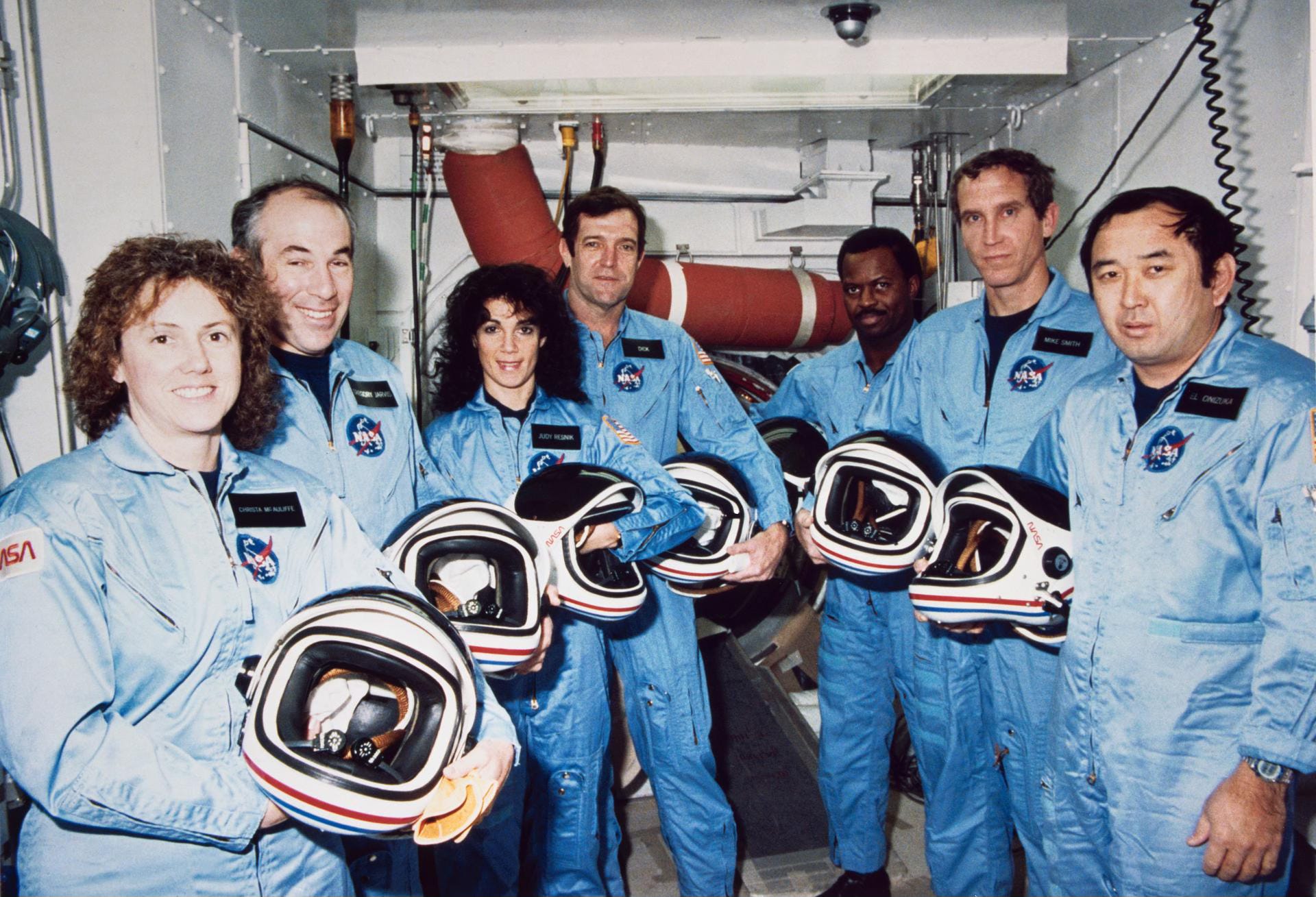
The big TV sits in the classroom corner and Mrs. Erickson explains you to us. We already know you. The country has been talking about you for months. You are a star. You are an astronaut to make us dream, build ships for Mars, launch another satellite with music and information out beyond the Milky Way like the saddest unread text. After we reconnect during the pandemic, I will send the same woman too many texts and she will say—once—that she never knows what to say. Like all classroom television sets, this one is on a black metal cart so it can be wheeled from room to room. School is an infrastructure organized around moving things from room to room. Everyone calls you by your first name, children, parents, reporters, the President. Christa. I do not know this is not really your first name. Your first name is Sharon. Christa is your middle name. Christa is your name. We think, Christa. My students will call me Travis. I will call all my professors by their first names. Dennis. Maggie. Ed. Peter. Here we say Mrs. Erickson. Mr. Trosko. Ms. York. I will meet her sons later. Now she is the 3rd and 4th grade teacher. Our school is small like we are small. Every classroom two grades placed together. After I graduate high school I will see Ms. York. She will be tan as though coming off a day snowboarding on the mountain. Light coffee skin, frosted glass frames. We will talk about her divorce or I will just think of her finally as a woman who loves, has sex, gets divorced. Our school is at the bottom of a mountain. I will not realize for a long time that we have really been two people all along: mountain people and below the mountain people. This will explain a lot of the things. Mrs. Erickson turns the knob on the front of the TV from off to on, then continues to turn it clockwise to find the channel. A bright white dot appears at the center of the blank black screen, instantly expanding in a rush of information from chaos to order as Mrs. Erickson turns the channels. The Big Bang will make sense to a generation of television children seeing this same thing each time we turn on Mister Rogers, or that kids show host wearing a vest covered in buttons. We want to give him a button and love him to the same degree we are later embarrassed by loving him. The same degree we later miss one another. The moving from room to room in neat lines. The plastic cafeteria trays. Sweat and wax of the gymnasium painted green. We dread having to shower naked as a group after gym class when we get to middle school. We find it hard to imagine being that grown up.
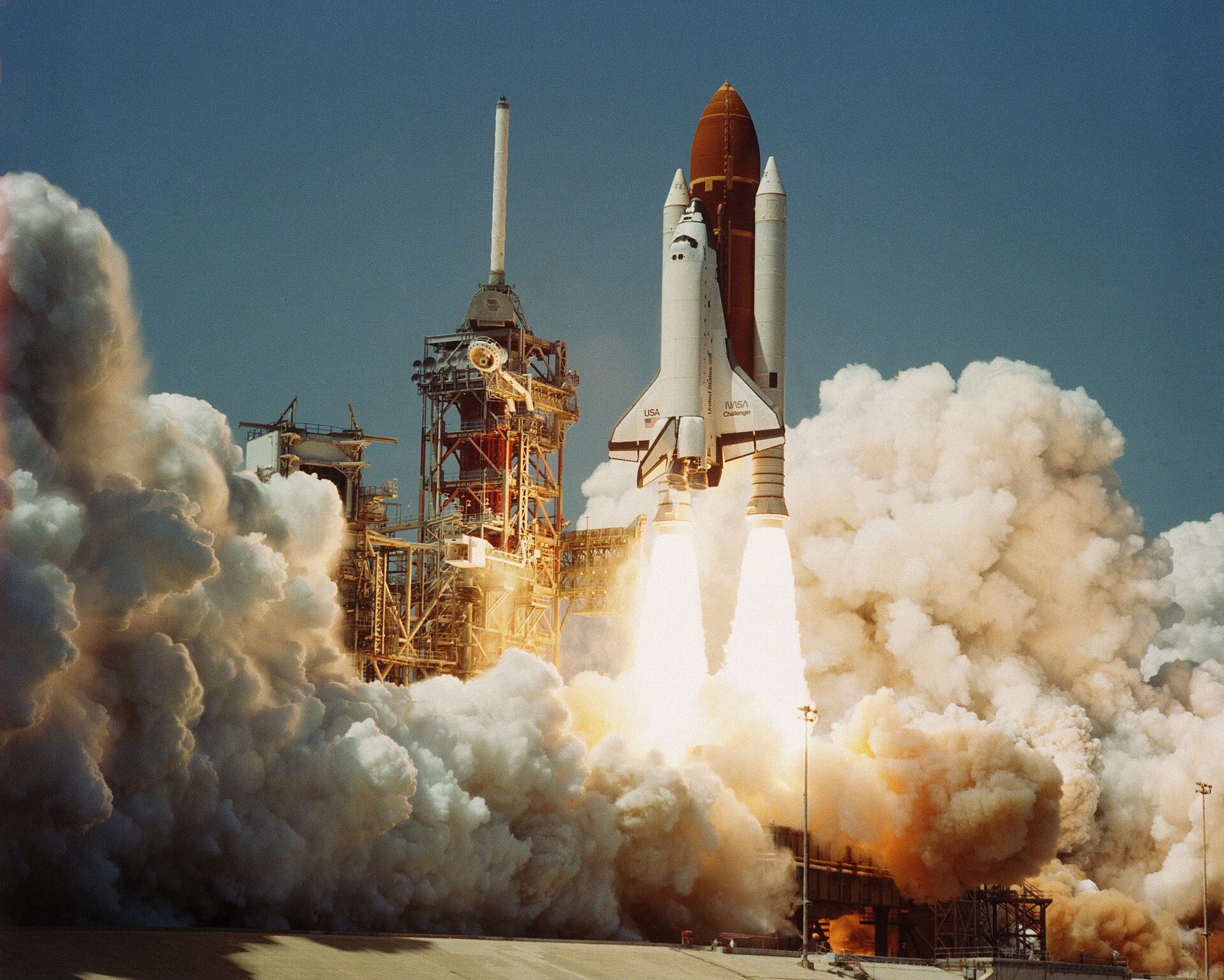
You have two children. Your husband went to Georgetown Law School, where my daughter will attend. We have stickers of rocket ships, but also of Garbage Pail Kids and pink donuts and Spider-Man and ones saying “You’re The Greatest!” and “Good Work!” You are a teacher, which is why the TV set is on and we are seated in our small chairs watching. It is 8:30 in the morning in Oregon and as we watch you at 11:30 in the morning in Florida, so in a way everything now already happened. Relativity. The sun in motion. From my living room set in Ashland I will watch a second plane crash into a second tower in a distant city where it is already brighter, the day long begun. I will be a teacher and have two children. It is a few weeks into 1986 and it is cold, even in Florida. This is why everything will come apart. We will all learn about this much later, and I will study it in a composition class in community college, but some people know the problem already, the cold and the danger to your lives. I wear my Coke-bottle glasses so my eyes look big as pancakes but I can see the distant television screen as the rockets catch fire in a loud rush. Brandt is in the next classroom over. His eyes work perfectly. His ears work perfectly. I will feel him perfect the rest of my life. I don’t know how else to love my brother. He will build computers with Dad in our house, connect servers at our high school, design apps for Starbucks and The University of California. My sticker book is open on my desk as I try to flatten the wrinkled edge of a wizard sticker so its pointed hat is as smooth as his face, robes, staff. I love these stickers. I will write plays. I will read my poems to small crowds. The TV picture shifts from the white Challenger shuttle to a wider shot taking in the large orange rocket booster attached to its belly, bigger than the ship, a massive thing small in relation to a more massive thing. Behind it all, NASA scaffolding the size of skyscrapers like the kind I will see across European cathedrals as John and I backpack from Spain to Hungary. I am so ignorant of history. We will not visit Florence. In Prague I will read Kafka’s The Trial only because John will be reading The Metamorphosis. I will admire John so much he will find it oppressive. I will not find my own urges easily. Rocket fire hot and loud and enormous and the smoke consuming everything as the shuttle lurches off. It looks small and slow on screen. We imagine the power ourselves. Cars sitting on your chest. You and the crew rising so fast the relationship between weight and pressure becomes maximal, self-aware. You are only weight. She will not write back.
We watch TV as though the world. Saturday morning cartoons and Dad’s evening news at 5 and again at 6 gain the normalization of illumination. Movies and screens originated on the stages of magicians trying to fascinate us with lies and tricks. Phantasmagoria and magic lanterns. This is real. There are ghosts, here, among us. They speak. The military precision of NASA like the orderliness of a school day creates expectations of achievement. Lunch will be served. Recess will be 30 minutes. The buses arrive on time, in a line. Rockets achieve orbit. Men on the moon—only men. We watch your ship rapidly recede into the deep air, like a balloon drifting across town that we eagerly follow with our eyes, swaying above trees, dipping below a building then back up again, we thought we had lost it as it becomes smaller, further away. We want to step outside our parents’ car to follow it, see where it leads. What is out there. Fascination.
Whiteness puffs across blue. “It looks like a flower,” not one of us says out loud. Things are unclear. Is anyone crying. Is Mrs. Erickson explaining what happened, the plume of smoke in the television sky. Why will this all feel like fiction in the future. Am I even here with you, in our small desks. I won’t remember any of this. Half a dream. Maybe this is something I make up. That I want to have seen you here. Have been a child. Beautiful skin. We don’t know all we know. I don’t know the names of the others lost. Francis. Michael. Judith. Ronald. Ellison. Gregory. That your name is Sharon. Death before us, inside each of us. “Apparatus of capture,” she exclaimed. Write me back. Magicians made the movies. We watch the giant flower dissolve until Mrs. Erickson turns it all off.
Ad astra,
Travis (1986)