
Or the Poem of Force
March 31, 2026
Dear Razan,
There is no such thing as a beginning. Beginnings only exist in stories, and stories are what get us into trouble. Stories separate us, keep us apart. “We tell ourselves stories,” Joan Didion wrote, “in order to live,” but she wrote that at the beginning of an essay about madness in herself and in California, in the news and in a nation, the one I write to you from. Maybe we tell ourselves stories to hoard, for protection, from fear, because some day we will all perish and we are so very afraid. Stories give us living against a backdrop of dying. When you look into your small son’s eyes, when I look into my grown daughters’ eyes, into the eyes of anyone I love, into the eyes of anyone, how can we not tell them a story—a beginning, a middle, and an end. We fell in love. These people are from here. This is how I was hurt, how you hurt me, how your grandfather was hurt or hunted. How someone hurt someone, how someone loved someone else. This is where we are going. And this is why. “The world is everything that is the case,” Wittgenstein opens his Tractatus. Facts are facts, stories and language cannot undermine or diminish that. The world is the case. Why is the story.
You met my daughter in the middle of your long story, also in the middle of another longer, larger story you have been unable to escape from, though hardly alone. Two million others alongside you, some now bodies only. Nothing is ever only. I don’t know if you believe in any kind of soul. I do not, though I see so much in the world around me, laws and movies, relationships and metaphors, seemingly built upon the idea of an everlasting me and everlasting you, some deep unobservable self, a story that is endless and forever. A story about fate. A story that locks in dramatic arc and chosen conclusion, chosen protagonists and chosen victims. Me and you, us and them, this land and that one. The dead trapped in the story as much as the living, as much as you and your son. Luckily, we are not our stories—though others, stories and storied themselves, often try to imprison us within them.
Your name is Razan. Your small son is Kenan. Like a two word poem, the two of you. You are younger than me, older than my oldest daughter, who you have grown so close to, and who has grown so close to you. You have one child of your own, born under bombs in a hospital you were rushed from not long after your son took his first earthly breaths. That we can breathe at all here, on this earth, I find to be miraculous. I do not need a soul or everlasting self to be brought to my knees by the miracle of experience. Touching a river. A kiss. My daughter’s birth in a Pennsylvania bedroom. Your son’s first breath. You also have a husband, someone who works to care for others. The three of you, but not only, never only. Why writing to you is writing to many. Why you knowing my daughter always felt like you knowing me, and—though we have never spoken—my knowing you. You are in Palestine, land of stories and storied. Ennobled by stories. Long besieged in the name of a story. You are in Gaza, a strip of land that a people of shared birth and shared history have been all but limited to by violence. By force. I have never been to Palestine, but I know it is both a real place and an imagined one, the same as any nation, any overlap of our hearts and stories with the physical world. I also know that naming and the imagination as applied to places and people can be assertions of power. Naming, alongside the erasure of names, can be an excuse for force.
During the violent years that would erupt into World War II, French philosopher (and near saint) Simone Weil thought about Troy. In the second half of 1940, after the fall of France to Germany—one country’s story and its capacity for violence swallowing another country and its people—Weil wrote an essay about the Ancient Greek epic The Iliad, the story of another besieged place, Troy, another swallowed people. Though The Iliad is a long poem about the decade-long war of gods and godlike men, Weil notes how the poem continually represents all of its whirling and warring violence at human scale. The individual experience or expression of force bodily. The treatment of any subject—any individual—as an object. Slaves and enslavers. Women captured, murdered, raped. Men gutted and gutting.
You found my daughter on the internet and she found you there. You found her first, arguably, but that’s a false beginning, as she was in many ways always looking for you. I think that’s just who she is: awake for love and the voices of others. She is constantly learning languages so as to not miss voices. She spends each day working to free those the state has silenced or might silence. You were looking for help from anyone, as we do in crisis. Flat tire in the night. Child with cancer. Help. Within a world near silent to the cries and the dying, you noticed on your phone a growing movement of people, largely young. Videos shared. Education about Palestine. Fundraising. Protest. So, you said, Hello. You said, I am here with my family, can you help? You look like the kind of people who will help.
“To define force,” Weil wrote in “The Iliad, or, The Poem of Force,” “it is that X that turns anybody who is subjected to it into a thing.” As simple, cruel, and obvious as that. Force turns subjects into objects, individuals to things. Weil underscores the brutality of force:
Exercised to the limit, it turns man into a thing in the most literal sense: it makes a corpse out of him. Somebody was there, and the next minute there is nobody here at all; this is a spectacle the Iliad never wearies of showing us.
An archer’s arrow through a man’s neck. A girl, Briseis, enslaved and assaulted by Achilles, by Agamemnon, by Achilles again. Women and girls kept and traded like gifts, prizes whose value is determined only by force. The Iliad, Weil teaches us, isn’t primarily concerned with the ten years war, with gods like Athena or men like Achilles. It is primarily concerned, deeply and horribly concerned, with force, with the inhumanity and violence of treating a person carelessly and simply as one would toss a stone. With the desire or violence of swords or sacked buildings, Greek ships littering a beachhead. To put hands upon. To leave behind. To watch burn.
I once saw Terry Tempest Williams speak at a writing conference in Iowa. Tempest Williams is the kind of writer who sees writing as action. She told the audience in Iowa that to her writing is an act of “unsuicide.” Her adult brother had not long ago taken his own life. Her writing since then, she said, was an effort to keep that from happening, keep us from losing ourselves and one another due to isolation and grief. To fight the stories we yoke ourselves to due to the imperfection and discomfort of speaking and listening and knowing others and being changed by them. “You must change your life,” commands the torso of Apollo in Rilke’s poem, and I’ve been terrified for a decade now to do so. My daughter, on the other hand, never seems terrified to.
The reason Weil chose The Iliad is because, across thousands of stanzas, from gods to demigods to kings to landowners to sons to daughters to enslaved and to enslaving, the poet Homer describes a world as complex as ours, where no one is completely free from the impacts of force. My daughter works in the prison system—more accurately in opposition to it. There is perhaps no clearer contemporary example of the use of force, subjects turned objects, than American mass incarceration. People bent to object status by greater force. So much of my life has been the work of knowing my daughter, as I am sure is true of you and Kenan. It is a life’s work, knowing others. The prison system makes someone unknowable and absent, as does violence in many forms. My youngest daughter talked in the car the other day about the sometimes awkward experience of knowing others. She was talking about friends in high school, how differences can highlight how “not them” she is, and that this can feel isolating, can feel like she is not enough. But the not enough is growth, perhaps the simplest definition of life. It’s a kind of emotional breathing, oxygen, this discomfort. All else is stasis, perhaps the simplest definition of death. My daughters—and my students, family, friends, lovers—have kept me always slightly failing, always never enough. The work of knowing is the discomfort of change and this is ongoing. “The dizziness of freedom,” as Kierkegaard described this unsettling experience of existence. Who then wouldn’t want to secure themself to a story, as Ulysses does to his ship mast as he sails home from sacked Troy, so as to not yield to the beauty of the sirens’ calls in the deep distant ocean. Perhaps staying within the dizziness of songs is important. To not yield to the temptations of reifying stories and rigid ship masts. I am afraid. I want to yield to the seeming permanence of my job, of whoever I am now, whoever loves me or thinks well of me, to not risk the dizziness of freedom and the discomfort of change and the risk of discovery.
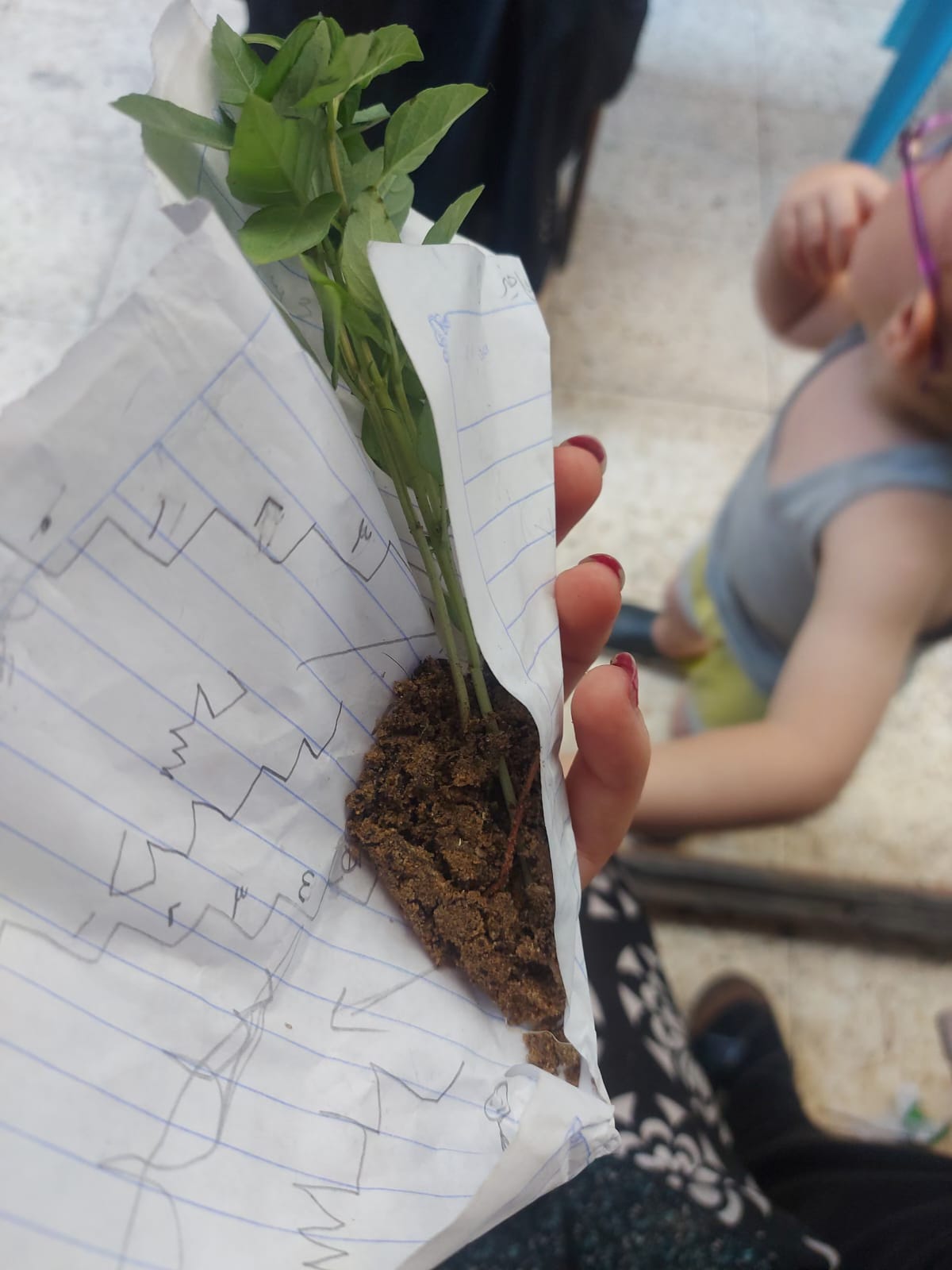
My daughter texted me months back: “Refreshing your substack waiting for the letter to Razan….” I’ve spent a year writing this. I keep wanting it to be perfect because people are dying and I don’t do enough. I never do enough. I am not enough. My daughter’s close friend has family now being forced to evacuate their homes in Lebanon. A school of young girls was murdered in Iran. There is no perfect, and silence is complicity. I will never be enough. This is a work of shame and of love and I will leave it. Kafka would command himself to leave errors on the page in order to expose his flaws to the world. Maybe more than ever it’s integral to expose ourselves as bloody imperfect things slouching towards graves. Not advertisements or platforms or writers. Unknown there for the work of knowing. The world is everything, that is the case. I want to cling to past loves and past ideas of myself and of them, but that is only, as a former student described, a glass prison. Abolition forever. Dear Razan, holding your herb in your hands, in your paper pot. Dear Kenan, your purple glasses. Hello. Hello, hello. I am here with my family. You seem like the kind of people who will help.